Donkey Secondary Antibodies
- (26)
- (4)
- (15)
- (4)
- (12)
- (6)
- (8)
- (2)
- (15)
- (4)
- (2)
- (4)
- (8)
- (4)
- (4)
- (8)
- (3)
- (3)
- (44)
- (61)
- (8)
- (1)
- (1)
- (21)
- (11)
- (18)
- (20)
- (20)
- (6)
- (18)
- (15)
- (11)
- (9)
- (52)
- (9)
- (78)
- (4)
- (24)
- (2)
- (2)
- (23)
- (4)
- (4)
- (4)
- (31)
- (26)
- (1)
- (1)
- (1)
- (1)
- (1)
- (6)
- (16)
- (16)
- (16)
- (66)
- (1)
- (781)
- (2)
- (1)
- (21)
- (9)
- (3)
- (142)
- (31)
- (2)
- (77)
- (218)
- (20)
- (38)
- (6)
- (10)
- (8)
- (2)
- (1)
- (1)
- (69)
- (4)
- (1)
- (1)
- (3)
- (3)
- (1)
- (1)
- (1)
- (22)
- (86)
- (2)
- (4)
- (778)
- (15)
- (14)
- (37)
- (451)
- (250)
- (87)
- (37)
- (212)
- (223)
- (20)
- (31)
- (416)
- (62)
- (161)
- (62)
- (46)
- (2)
- (3)
- (5)
- (4)
- (520)
Filtered Search Results
Biotium CF555 DONKEY ANTI-RABBIT X-ADS 50UL
CF555 DONKEY ANTI-RABBIT X-ADS 50UL
Non-distribution item offered as a customer accommodation; additional freight charges may apply.
Learn More
Biotium CF680 DONKEY ANTI-GUINEA PG X-ADS 250UL
CF680 DONKEY ANTI-GUINEA PG X-ADS 250UL
Non-distribution item offered as a customer accommodation; additional freight charges may apply.
Learn More
Biotium CD7(B-F12), CF594 conjugate, 0.1mg/mL
Recognizes a protein of 40 kDa, identified as CD7 (also known as gp40, Leu9). CD7 is a member of the immunoglobulin gene superfamily. Its N-terminal amino acids 1-107 are highly homologous to Ig kappa-L chains whereas the carboxyl-terminal region of the extracellular domain is proline-rich and has been postulated to form a stalk from which the Ig domain projects. CD7 is expressed on the majority of immature and mature T-lymphocytes, and T cell leukemia. It is also found on natural killer cells, a small subpopulation of normal B cells and on malignant B cells. Cross-linking surface CD7 positively modulates T cell and NK cell activity as measured by calcium fluxes, expression of adhesion molecules, cytokine secretion and proliferation. CD7 associates directly with phosphoinositol 3'-kinase. CD7 ligation induces production of D-3 phosphoinositides and tyrosine phosphorylation.Primary antibodies are available purified, or with a selection of fluorescent CF Dyes and other labels.
Non-distribution item offered as a customer accommodation; additional freight charges may apply.
Learn More
Biotium pgp9.5 (UCHL-1)(31A3), CF488A conjugate, 0.1mg/mL
This MAb reacts with a protein of 20-30 kDa, identified as PGP9.5, also known as ubiquitin carboxyl-terminal hydrolase-1 (UchL1). Initially, PGP9.5 expression in normal tissues was reported in neurons and neuroendocrine cells but later it was found in distal renal tubular epithelium, spermatogonia, Leydig cells, oocytes, melanocytes, prostatic secretory epithelium, ejaculatory duct cells, epididymis, mammary epithelial cells, Merkel cells, and dermal fibroblasts. Furthermore, immunostaining for PGP9.5 has been shown in a wide variety of mesenchymal neoplasms as well. A mutation in PGP9.5 gene is believed to cause a form of Parkinson's disease.Primary antibodies are available purified, or with a selection of fluorescent CF Dyes and other labels. CF Dyes offer exceptional brightness and photostability. Note: Conjugates of blue fluorescent dyes like CF405S and CF405M are not recommended for detecting low abundance targets, because blue dyes have lower fluorescence and can g
Non-distribution item offered as a customer accommodation; additional freight charges may apply.
Learn More
Biotium AFP (Alpha Fetoprotein)(C3), CF568 conjugate, 0.1mg/mL
Alpha-fetoprotein (AFP) is an oncofetal glycoprotein with a single chain of 70 kDa. This MAb is highly specific to AFP and shows no cross-reaction with other oncofetal antigens or serum albumin. AFP is normally synthesized in the liver, intestinal tract, and yolk sac of the fetus. Antibody to AFP has been shown to be useful in detecting hepatocellular carcinomas (HCC) and germ cell neoplasms, especially yolk sac tumors.Primary antibodies are available purified, or with a selection of fluorescent CF Dyes and other labels. CF Dyes offer exceptional brightness and photostability. Note: Conjugates of blue fluorescent dyes like CF405S and CF405M are not recommended for detecting low abundance targets, because blue dyes have lower fluorescence and can give higher non-specific background than other dye colors.
Non-distribution item offered as a customer accommodation; additional freight charges may apply.
Learn More
Biotium Human IgG Immunoglobulin(IG217), CF594 conjugate, 0.1mg/mL
Recognizes a protein of 75 kDa, identified as γ heavy chain of human immunoglobulins. It reacts with all sub-classes of γ chain of human immunoglobulins. It does not cross-react with α (IgA), μ (IgM), ε (IgE), or δ (IgD), heavy chains, T-cells, monocytes, granulocytes, or erythrocytes. This MAb is useful in the identification of leukemias, plasmacytomas, and certain non-Hodgkin's lymphomas. The most common feature of these malignancies is the restricted expression of a single heavy chain class. Demonstration of clonality in lymphoid infiltrates indicates that the infiltrate is clonal and therefore malignant.Primary antibodies are available purified, or with a selection of fluorescent CF Dyes and other labels. CF Dyes offer exceptional brightness and photostability. Note: Conjugates of blue fluorescent dyes like CF405S and CF405M are not recommended for detecting low abundance targets, because blue dyes have lower fluorescence and can give higher non-specific ba
Non-distribution item offered as a customer accommodation; additional freight charges may apply.
Learn More
Biotium Human IgM Immunoglobulin(IM373), CF647 conjugate, 0.1mg/mL
Recognizes a protein of 75 kDa, identified as mu heavy chain of human immunoglobulins. It does not cross-react with alpha (IgA), gamma (IgG), epsilon (IgE), or delta (IgD), heavy chains, T-cells, monocytes, granulocytes, or erythrocytes. This MAb is useful in the identification of leukemias, plasmacytomas, and certain non-Hodgkin's lymphomas. The most common feature of these malignancies is the restricted expression of a single heavy chain class. Demonstration of clonality in lymphoid infiltrates indicates that the infiltrate is clonal and therefore malignant.Primary antibodies are available purified, or with a selection of fluorescent CF Dyes and other labels. CF Dyes offer exceptional brightness and photostability. Note: Conjugates of blue fluorescent dyes like CF405S and CF405M are not recommended for detecting low abundance targets, because blue dyes have lower fluorescence and can give higher non-specific background than other dye colors.
Non-distribution item offered as a customer accommodation; additional freight charges may apply.
Learn More
Biotium Podocalyxin(3D3), CF647 conjugate, 0.1mg/mL
Podocalyxin is a member of the CD34 transmembrane sialomucin family. It is highly on kidney podocyte foot projections and plays essential roles in kidney development and homeostasis, blood filtration and urine formation. It is also expressed on vascular endothelia, hematopoietic progenitors and a subset of neurons. Overexpression of podocalyxin may be linked to more aggressive tumor behavior. Podocalyxin antibody can identify podocytes in the urine (podocyturia) that may indicate glomerular disease, pre-eclampsia, and other kidney pathology.Primary antibodies are available purified, or with a selection of fluorescent CF Dyes and other labels. CF Dyes offer exceptional brightness and photostability. Note: Conjugates of blue fluorescent dyes like CF405S and CF405M are not recommended for detecting low abundance targets, because blue dyes have lower fluorescence and can give higher non-specific background than other dye colors.
Non-distribution item offered as a customer accommodation; additional freight charges may apply.
Learn More
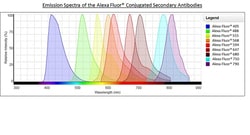
Abcam Donkey Anti-Rabbit IgG H&L Alexa Fluor 680
Donkey Anti-Rabbit IgG H&L Alexa Fluor 680
The product is subject to the following: Abcam Restricted Use Statement
Non-distribution item offered as a customer accommodation; additional freight charges may apply.
Learn More
Abcam Donkey Anti-Rabbit IgG H&L HRp preadsorbed
Donkey Anti-Rabbit IgG H&L HRp preadsorbed
The product is subject to the following: Abcam Restricted Use Statement
Non-distribution item offered as a customer accommodation; additional freight charges may apply.
Learn More
Biotium Nucleophosmin (Acute Myeloid Leukemia Marker)(NPM1/3287), CF647 conjugate, 0.1mg/mL
Recognizes a 33 kDa glycoprotein, identified as Nucleophosmin (NPM). It is predominantly localized in the nucleus of cells in most tissues. NPM is involved in ribosomal assembly and rRNA transport. It is an abundant protein that is highly phosphorylated by Cdc2 kinase during mitosis. This phosphoprotein moves between the nucleus and the cytoplasm. It is thought to be involved in several processes including regulation of the ARF/p53 pathway. A number of genes are fusion partners, in particular the anaplastic lymphoma kinase gene on chromosome 2. Mutations in exon 12 affecting the C-terminus of the protein are associated with an aberrant cytoplasmic location. Mutations in this gene are associated with acute myeloid leukemia. The antibody may be a useful aid for classification of acute myeloid leukemia. Primary antibodies are available purified, or with a selection of fluorescent CF Dyes and other labels. CF Dyes offer exceptional brightness and photostability. Note: Conjugat
Non-distribution item offered as a customer accommodation; additional freight charges may apply.
Learn More
Biotium Spectrin beta III (SPTBN2)(SPTBN2/2979R), CF647 conjugate, 0.1mg/mL
Spectrin is an actin binding protein that is a major component of the plasma membrane skeleton. Spectrins function as membrane organizers and stabilizers by forming dimers, tetramers and higher polymers. Vertebrate spectrins have two alpha-subunits (alpha-I/alpha-II) four beta-subunits (beta-I-beta-IV) and a beta-H subunit creating diversity and specialization of function. Spectrin III is highly expressed in brain, kidney, pancreas and liver, and at lower levels in lung and placenta. Spectrin beta 3 is primarily expressed in nervous tissues with highest expression levels in the cerebellum, where it is found in Purkinje cell soma and dendrites. Primary antibodies are available purified, or with a selection of fluorescent CF Dyes and other labels. CF Dyes offer exceptional brightness and photostability. Note: Conjugates of blue fluorescent dyes like CF405S and CF405M are not recommended for detecting low abundance targets, because blue dyes have lower fluorescence and can
Non-distribution item offered as a customer accommodation; additional freight charges may apply.
Learn More
Biotium C1QA / Complement C1q A-Chain(C1QA/2952), CF647 conjugate, 0.1mg/mL
Complement C1q A Chain (C1qa) is a subunit of C1q. C1q is composed of 6 polypeptide chains each of C1qa, C1qb, and C1qc. C1q is a component of the classical complement pathway, and thereby plays an important role in the immune response. Each C1q subunit contains an N-terminal collagen-like region and a C-terminal C1q globular domain. The presence of receptors for C1q on effector cells modulates its activity, which may be antibody-dependent or independent. Macrophages are the primary source of C1q, while anti-inflammatory drugs as well as cytokines differentially regulate expression of the mRNA as well as the protein. C1q deficiency is associated with lupus erythematosus and glomerulonephritis. Primary antibodies are available purified, or with a selection of fluorescent CF Dyes and other labels. CF Dyes offer exceptional brightness and photostability. Note: Conjugates of blue fluorescent dyes like CF405S and CF405M are not recommended for detecting low abundance targets,
Non-distribution item offered as a customer accommodation; additional freight charges may apply.
Learn More
Biotium NKX3.1 (Metastatic Prostate Adenocarcinoma Marker)(NKX3.1/3347), CF647 conjugate, 0.1mg/mL
NKX3. 1 is a prostate specific gene encoding a transcription factor that plays an important role in normal prostate development and carcinogenesis. It is a prostatic tumor suppressor gene located on chromosome 8p21. 2, which frequently undergoes a loss of heterozygosity. NKX3. 1 expression is highly restricted in prostate epithelial cells and therefore can be used as a diagnostic biomarker for prostate cancer and other metastatic lesions of prostatic origin. Furthermore, NKX3. 1 shows better sensitivity than Prostate Specific Antigen (PSA) for identifying metastatic prostatic adenocarcinoma. This suggests that immunohistochemical staining of NKX3. 1, along with other prostate-restricted markers, may be valuable for the definitive determination of prostatic origin in poorly differentiated metastatic carcinomas. Primary antibodies are available purified, or with a selection of fluorescent CF Dyes and other labels. CF Dyes offer exceptional brightness and photostability. Note
Non-distribution item offered as a customer accommodation; additional freight charges may apply.
Learn More
Biotium Histone H1 (Pan Nuclear Marker)(rAE-4), CF647 conjugate, 0.1mg/mL
Please note that this antibody is a recombinant Mouse version of original anti-histone H1 antibody (Clone AE-4). Because the variable heavy (VH) and variable light (VL) domains are the same, recombinant antibody has the same exact reactivity as the original AE-4 MAb. There are several advantages of producing a recombinant version of a monoclonal antibody. For example, a recombinant antibody is a purer preparation of active immunoglobulin with no contaminating non-functional intact Ig or free light/heavy chains. Secondly, antibody can always be produced, even if hybridoma line is lost. Moreover, it adds the flexibility of converting the antibody to any species, isotype or format. Eukaryotic histones are basic and water-soluble nuclear proteins that form hetero-octameric nucleosome particles by wrapping 146 base pairs of DNA in a left-handed super-helical turn sequentially to form chromosomal fiber. Two molecules of each of the four core histones (H2A, H2B, H3, and H4) form the
Non-distribution item offered as a customer accommodation; additional freight charges may apply.
Learn More